 (208) 991-3502
 Meridian, ID






 January 11, 2026
Jobsite security isn’t one-size-fits-all. Learn the difference between temporary and permanent jobsite security and how Treasure Valley builders choose the right solution for each phase of construction.
Every construction project follows a timeline—but security needs change at every stage along the way. Early groundwork looks very different from framing. Framing looks different from finish work. And a jobsite that’s wide open today may be fully enclosed a few months from now.
That’s why one of the most important decisions builders face is whether to use temporary jobsite security, permanent security infrastructure, or a combination of both.
For builders and contractors across the Treasure Valley, understanding this difference helps protect materials, equipment, and schedules without overspending or overbuilding security that doesn’t match the jobsite’s reality.
Why Security Needs Change During Construction
Unlike finished buildings, construction sites are constantly evolving.
Access points move. Materials arrive and disappear. Trades rotate. Power availability changes. What works during excavation may fail completely once framing starts.
Security systems that don’t adapt to these changes quickly become ineffective. The goal isn’t to install “the best system”—it’s to install the right system for the current phase of the project.
That’s where the distinction between temporary and permanent security becomes important.
What Temporary Jobsite Security Is Designed For
Temporary jobsite security is built specifically for active construction environments.
These systems are designed to:
Deploy quickly
Operate without permanent infrastructure
Adapt as the site layout changes
Be relocated or removed when the project ends
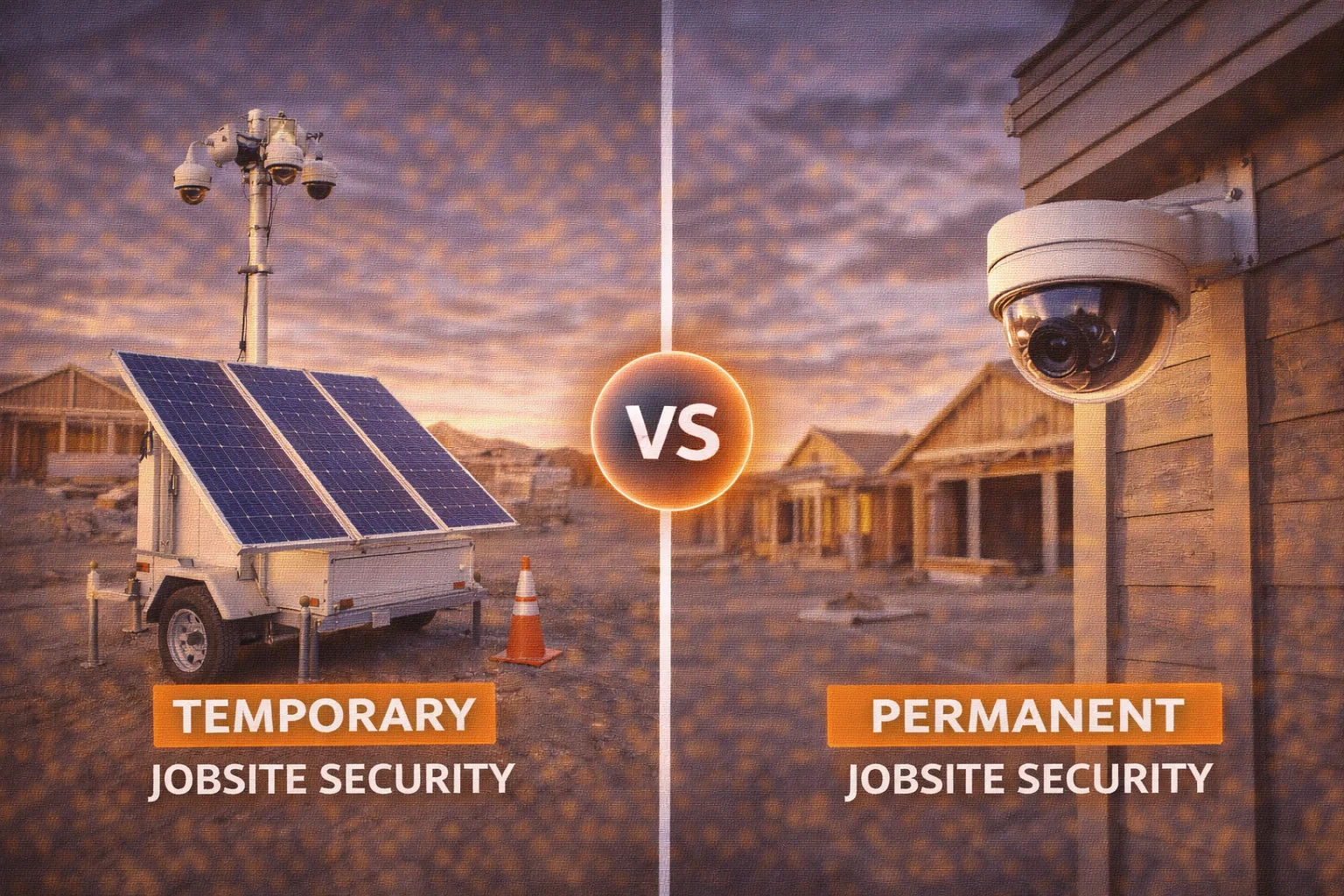
Temporary systems often include mobile camera trailers, pole-mounted cameras, solar or generator power, and cellular connectivity. They’re commonly used during early phases when buildings aren’t enclosed and permanent wiring isn’t practical.
For many Treasure Valley builders, temporary security is the only realistic option during the most vulnerable stages of construction.
Where Temporary Security Works Best
Temporary jobsite security is especially effective during:
Site prep and excavation
Framing and rough-in phases
Periods when materials are staged outdoors
Projects with limited or unreliable power
These phases tend to be high-risk because materials are exposed, access is wide open, and sites are unattended for long stretches.
Temporary systems provide visibility and deterrence without requiring permanent installation—making them ideal for early and mid-construction stages.
Many builders explore these options while researching broader solutions available through
👉 https://treasurevalleysolutions.com/services/
What Permanent Jobsite Security Looks Like
Permanent jobsite security becomes relevant once a project starts to resemble a finished structure.
Permanent systems typically involve:
Hardwired cameras
Fixed mounting locations
Integration with permanent power and networking
Long-term use beyond construction
These systems are often installed during later construction phases or when a project transitions from build-out to occupancy.
Permanent security is common on:
Multi-family developments
Commercial buildings
Facilities that will remain monitored after completion
At this stage, security planning begins to overlap with long-term building operations.
The Risks of Choosing the Wrong Approach
Using permanent security too early can create problems. Wiring may be damaged. Cameras may need to be moved repeatedly. Systems may not survive construction conditions.
On the other hand, relying on temporary security too long can leave gaps once a building is enclosed and access becomes more controlled.
The biggest risk is treating security as a one-time decision instead of a phased strategy.
Builders who struggle with jobsite theft often discover that their security didn’t fail—it simply didn’t match the stage of construction.
A Phased Security Strategy Works Best
Most successful projects use a layered, phased approach.
Temporary security protects materials and equipment during early stages. As the project progresses, security evolves—either by relocating temporary systems or transitioning to permanent infrastructure where appropriate.
This strategy:
Reduces unnecessary cost
Improves coverage at every phase
Avoids rework or wasted equipment
Matches protection to actual risk
This kind of planning aligns with broader jobsite strategies similar to those discussed within
👉 https://treasurevalleysolutions.com/solutions/homeowner-solutions/
(adapted here for professional construction environments).
Power and Connectivity Considerations
Power availability often determines which security approach is feasible.
Temporary systems are designed to operate without permanent power, using solar, generators, or temporary electrical connections. Permanent systems assume stable power and network infrastructure.
Trying to force a permanent system onto a site without reliable power often results in downtime and false confidence—two things builders can’t afford.
Security should work with jobsite conditions, not against them.
Why Professional Planning Matters More Than Equipment
Choosing between temporary and permanent security isn’t about product selection—it’s about strategy.
Professional planning ensures:
Security matches each construction phase
Coverage adapts as the site changes
Equipment isn’t overused or underutilized
Transitions between systems are smooth
Builders who plan security intentionally experience fewer losses, fewer headaches, and better project continuity.
Frequently Asked Questions
Can temporary security really be reliable?
Yes. When designed properly, temporary systems are highly reliable and purpose-built for construction environments.
Do I have to choose one or the other?
No. Many projects use both at different stages.
When should permanent security be installed?
Typically during later construction phases, once structures are enclosed and infrastructure is stable.
Is temporary security expensive?
It’s often far less expensive than repeated material theft or project delays.
Can systems be moved between jobsites?
Yes. Temporary systems are designed for reuse and relocation.
Matching Security to the Jobsite, Not the Other Way Around
Jobsite security works best when it follows the realities of construction—not rigid assumptions.
Temporary security protects early-stage sites when risk is highest and infrastructure is limited. Permanent security takes over as projects near completion and long-term monitoring becomes necessary.
For Treasure Valley builders, understanding this difference leads to smarter decisions, better protection, and fewer costly surprises. When security evolves with the jobsite, it becomes a practical tool—not a problem to manage.